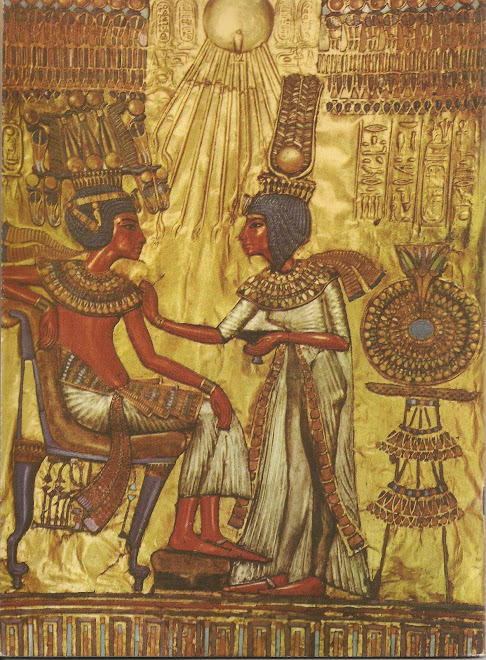
Pharaoh Akhenaten and his family adoring the Aten, second from the left is Meritaten who was the daughter of Akhenaten.
Mostrar mensagens com a etiqueta edições nova acrópole. Mostrar todas as mensagens

segunda-feira, 10 de dezembro de 2012

Portugal, A Missão Que Falta Cumprir - Vol. I: Arquétipos e Mitos


Info On Rainer Daehnhardt (only in portuguese...):

Rainer Daehnhardt (7 de dezembro de 1941) é um historiador e colecionador luso-alemão.

Biografia

É descendente de uma família de diplomatas e militares alemães radicados em Portugal desde 1706.
Fez os seus estudos na Alemanha e em Portugal, especializando-se no estudo de armaria.
Preside a Sociedade Portuguesa de Armas Antigas desde 1972, representando Portugal em congressos internacionais e dando conferências em muitas instituições europeias, americanas e asiáticas. É membro da Arms and Armour Society de Londres, da Gesellschaft für Historische Waffen und Kostümkund de Berlim e da Rowland Society. É membro honorário da ASAC (American Society of Arms Collectors) dos EUA.
É autor de livros e artigos, na sua maioria ligados à armaria antiga e à História de Portugal.

Obra

1961- Einzelne Stücke meiner Antiquitätensammlung , edição do autor
1970- Coleccionar Armas Antigas (vol.I), edição Sala das Armas
1971- A Sociedade Portuguesa de Armas Antigas (depois incluído nos Estatutos da Sociedade Portuguesa de Armas Antigas em 1972), edição SPAA
1975- Espingardaria Portuguesa/Armurerie Liegeoise, com Claude Gaier. Edição da F.N. de Viana do Castelo
1990- Alguns Segredos de História Luso-Alemã. Edição bilingue (Português/Alemão), Edição Pesquisa Histórica
1991- A Missão Templária nos Descobrimentos. 1ª edição Nova Acrópole
1993- Páginas Secretas da História de Portugal (vol.1). 1ª edição Nova Acrópole
1994- Páginas Secretas da História de Portugal (vol.II). 1ª edição Nova Acrópole
1994- Espingarda Feiticeira. 1ª edição, Texto Editora
1994- Portugal, a Missão que Falta Cumprir. Com Eduardo Amarante. 1ª edição Nova Acrópole
1996- Homens, Espadas e Tomates. 1ª edição, Nova Acrópole
1997- Potes de Especiarias nas Naus das Carreiras das Índias do séc. XV ao séc. XVIII. Edição do Grupo de Amigos do Museu de Marinha
1998- Acerca das Armaduras de D. Sebastião. 1ª edição, Publicações Quipu
1998- Acerca da Viagem de Vasco da Gama. 1ª edição, Publicações Quipu
1998- Dos Açores à Antárctida. 1ª edição, Publicações Quipu
1999- Mulheres de Armas e Coragem. 1ª edição, Publicações Quipu
1999- Portugal e a Europa – Traídos e Burlados. 1ª edição, Publicações Quipu
1999- O Homem e a Arma-A Humanidade no Caminho da Auto-Extinção? 1º edição. Publicações Quipu
2000- Do Céu ao Inferno/From Heaven to Hell. Com Heinz Schön. 1ª edição, Publicações Quipu
2002- Identidade Portuguesa, Porque a Defendo. 1ª edição. Edições Quipu
2003- Geburt, Tod und Auferstehung des Deutschlandliedes. 1ª edição. Edições Quipu
2004- Mir Reicht’s. 1ª edição. Edição Pesquisa Histórica
2005- Portugal Cristianíssimo. 1ª edição. Zéfiro
2006- O Perdão dos Templários (com vários autores). 1ª edição. Zéfiro
2009- Segredos da Descoberta da Austrália pelos Portugueses (com textos de George Collingridge e Richard H. Major). 1º edição. Zéfiro
2010- O Enigma-Fernão de Magalhães (com textos de Latino Coelho e Caetano Alberto). 1ª edição. Apeiron Edições
2011- D. Sebastião-O Elmo e Alcácer Quibir. 1ª edição. Apeiron Edições
2012- Ser Português! Uma Honra, um Privilégio Merecido, ou um Acaso Assumido? 1ª edição. Apeiron Edições

Ligações externas


sábado, 10 de março de 2012

Egipto - História * Arte * Simbolismo


General Info About The Subject Of The Book:

Ancient Egypt was an ancient civilization of Northeastern Africa, concentrated along the lower reaches of the Nile River in what is now the modern country of Egypt. Egyptian civilization coalesced around 3150 BC (according to conventional Egyptian chronology)[1] with the political unification of Upper and Lower Egypt under the first pharaoh.[2] The history of ancient Egypt occurred in a series of stable Kingdoms, separated by periods of relative instability known as Intermediate Periods: the Old Kingdom of the Early Bronze Age, the Middle Kingdom of the Middle Bronze Age and the New Kingdom of the Late Bronze Age. Egypt reached the pinnacle of its power during the New Kingdom, in the Ramesside period, after which it entered a period of slow decline. Egypt was conquered by a succession of foreign powers in this Late Period. In the aftermath of Alexander the Great's death, one of his generals, Ptolemy Soter, established himself as the new ruler of Egypt. This Ptolemaic Dynasty ruled Egypt until 30 BC, when it fell to the Roman Empire and became a Roman province.[3]

The success of ancient Egyptian civilization came partly from its ability to adapt to the conditions of the Nile River Valley. The predictable flooding and controlled irrigation of the fertile valley produced surplus crops, which fueled social development and culture. With resources to spare, the administration sponsored mineral exploitation of the valley and surrounding desert regions, the early development of an independent writing system, the organization of collective construction and agricultural projects, trade with surrounding regions, and a military intended to defeat foreign enemies and assert Egyptian dominance. Motivating and organizing these activities was a bureaucracy of elite scribes, religious leaders, and administrators under the control of a Pharaoh who ensured the cooperation and unity of the Egyptian people in the context of an elaborate system of religious beliefs.[4][5]

The many achievements of the ancient Egyptians include the quarrying, surveying and construction techniques that facilitated the building of monumental pyramids, temples, and obelisks; a system of mathematics, a practical and effective system of medicine, irrigation systems and agricultural production techniques, the first known ships,[6] Egyptian faience and glass technology, new forms of literature, and the earliest known peace treaty.[7] Egypt left a lasting legacy. Its art and architecture were widely copied, and its antiquities carried off to far corners of the world. Its monumental ruins have inspired the imaginations of travellers and writers for centuries. A new-found respect for antiquities and excavations in the early modern period led to the scientific investigation of Egyptian civilization and a greater appreciation of its cultural legacy.[8]

Contents


1 History
1.1 Predynastic period
1.2 Early Dynastic Period (c. 3050 –2686 BC)
1.3 Old Kingdom (2686–2181 BC)
1.4 First Intermediate Period (2181–1991 BC)
1.5 Middle Kingdom (2134–1690 BC)
1.6 Second Intermediate Period (1674–1549 BC) and the Hyksos
1.7 New Kingdom (1549–1069 BC)
1.8 Third Intermediate Period (1069 – 653 BC)
1.9 Late Period (672 – 332 BC)
1.10 Ptolemaic dynasty
1.11 Roman Period
1.12 Arab Muslim Conquest
2 Government and economy
2.1 Administration and commerce
2.2 Social status
2.3 Legal system
2.4 Agriculture
2.4.1 Animals
2.5 Natural resources
2.6 Trade
3 Language
3.1 Historical development
3.2 Sounds and grammar
3.3 Writing
3.4 Literature
4 Culture
4.1 Daily life
4.2 Cuisine
4.3 Architecture
4.4 Art
4.5 Religious beliefs
4.6 Burial customs
4.7 Military
5 Technology, medicine, and mathematics
5.1 Technology
5.2 Faience and glass
5.3 Medicine
5.4 Shipbuilding
5.5 Mathematics
6 Legacy
7 See also
8 Notes
9 References
10 Further reading
11 External links


Extract And Contents Taken From: http://en.wikipedia.org/wiki/Ancient_Egypt