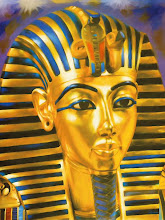
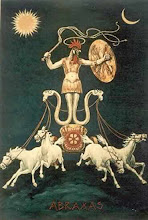
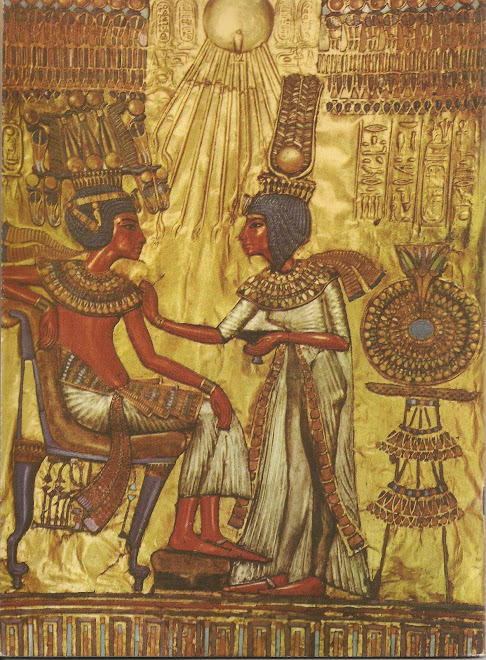
Pharaoh Akhenaten and his family adoring the Aten, second from the left is Meritaten who was the daughter of Akhenaten.
Mostrar mensagens com a etiqueta xerox books. Mostrar todas as mensagens

sábado, 1 de outubro de 2011

Hitler e as Religiões da Suástica (Hitler et la Tradition Cathare)


About the Author(s):


Michel Bertrand (né en 1944) est un écrivain et journaliste français connu aussi sous le pseudonyme de Michel Angebert.

Officier-marinier de réserve, directeur de collection à Ouest-France et aux Éditions maritimes et d'outre-mer (en 1985), il est spécialiste de la guerre navale 1939-1945[1]. Il a également utilisé le pseudonyme collectif de Jean-Michel Angebert avec Jean-Victor Angelini (qui a lui-même utilisé le pseudonyme de Jean Angebert). Ses principales publications portent sur l'ésotérisme, le saint Graal et la tradition primordiale. Il a dirigé la revue Connaissance des religions (1987-1991, puis 1993-2000)

Publications

Michel Angebert

  • Le Graal dans la tradition primordiale, conférence du 29 janvier 1973, Paris, Institut d'herméneutique, 1973.
  • Contribution à Julius Evola, le visionnaire foudroyé, avec Robert de Herte, Vintila Horia, Pierre Pascal, et al., Paris, Éditions Copernic, 1977.
  • avec Gautier Darcy, Histoire secrète de la Bourgogne, Paris, Albin Michel, « Histoire secrète des provinces françaises », 1978.
Jean-Michel Angebert

  • Hitler et la tradition cathare, Paris, Robert Laffont, « Les énigmes de l'univers », 1971.
  • Les Mystiques du soleil, Paris, Robert Laffont, « Les énigmes de l'univers », 1971.
  • Le Livre de la tradition, Paris, Robert Laffont, « Les énigmes de l'univers », 1972.
Michel Bertrand

  • Histoire secrète de la Provence, Paris, Albin Michel, « Histoire secrète des provinces françaises » 1978.
  • Les Forces navales françaises libres, Paris, Argout, 1980.
  • La Marine française au combat (1939-1945), Paris ; Limoges, Charles-Lavauzelle, 1982.
  • Le Soleil des Cathares. Montségur citadelle du Graal, Paris, Atlas, 1982.
  • Histoire secrète de Strasbourg, Paris, Albin Michel, « Histoire secrète des provinces françaises » 1984.
  • Suffren (1729-1788). De Saint-Tropez aux Indes, Paris, Perrin, 1991.

Source: Wikipedia (France)

terça-feira, 19 de julho de 2011

A Tradição Hermética


The Author of the Book:


Barone Giulio Cesare Andrea Evola (May 19, 1898 – June 11, 1974) also known as Julius Evola, was an Italian philosopher and esotericist. Evola regarded his stances and spiritual values as aristocratic, masculine, traditionalist, heroic and defiantly reactionary.


Evola believed that mankind is living in the Kali Yuga, a Dark Age of unleashed materialistic appetites, spiritual oblivion and organised deviancy. To counter this and call in a primordial rebirth, Evola presented his world of Tradition. The core trilogy of Evola's works are generally regarded as Revolt Against the Modern World, Men Among the Ruins and Ride the Tiger. According to one scholar, "Evola’s thought can be considered one of the most radically and consistently antiegalitarian, antiliberal, antidemocratic, and antipopular systems in the twentieth century."[1] Much of Evola's theories and writings are centred on spiritualism and mysticism; the inner life. He authored books covering themes such as Hermeticism, the metaphysics of war and of sex, Tantra, Buddhism, Taoism, mountaineering, the Holy Grail, the essence and history of civilisations, decadence and various philosophic and religious Traditions dealing with both the Classics and the Orient.

Though never a member of the National Fascist Party itself, or advocate of the term to describe his stances — Evola regarded his position as that of a sympathetic right-wing intellectual, who saw potential in the movement and wished to guide or reform its errors through criticism, to a position inline with his own views. One of his successes was in regards to the racial laws; his advocation of a spiritual consideration of race won out in the debate in Italy, rather than a solely materialist reductionism concept popular in Germany. Since World War II many Radical Traditionalist, New Right, Conservative Revolutionary, Fascist and Third Positionist groups have taken inspiration from him.

This restriction must be kept in mind. What I am about to say does not concern the ordinary man of our day. On the contrary, I have in mind the man who finds himself involved in today's world, even at its most problematic and paroxysmal points; yet he does not belong inwardly to such a world, nor will he give in to it. He feels himself, in essence, as belonging to a different race from that of the overwhelming majority of his contemporaries. -Evola, Ride the Tiger, 1961


Extract taken from Wikipedia Article

Site da editora do livro Edições 70

quinta-feira, 9 de junho de 2011

Nostradamus - A Magia Branca e a Magia Negra


Michel de Nostredame ou Miquèl de Nostradama,[1] mais conhecido sob o nome de Nostradamus (Saint-Rémy-de-Provence, 14 de dezembro de 1503 ou 21 de dezembro de 1503[2] — Salon-de-Provence, 2 de julho de 1566), foi um apotecário e médico da Renascença que praticava a alquimia (como muitos dos médicos do século XVI). Ficou famoso por sua suposta capacidade de vidência. Sua obra mais famosa, As Profecias, é composta de versos agrupados em quatro linhas (quatrains), organizados em blocos de cem (centuries); algumas pessoas acreditam que estes versos contém previsões codificadas do futuro[3].


Sofria de epilepsia psíquica, de gota e de insuficiência cardíaca. Morreu em 2 de julho de 1566 em Salon-de-Provence, vítima de um edema cárdio-pulmonar.


Extrato retirado daqui: http://pt.wikipedia.org/wiki/Nostradamus